The CEO Skill of Staying Calm: Responding Instead of Reacting
In business, pressure is unavoidable.
Clients become frustrated.
Unexpected problems happen.
Numbers fluctuate.
Systems fail.
Stress builds quickly.
Strong leadership is not measured by how emotionally a CEO reacts in those moments.
It is measured by how calmly they respond.
The ability to stay grounded under pressure allows CEOs to think clearly, protect relationships, and make better long-term decisions.
Calm leadership is not weakness.
It is emotional discipline.
The How-To Steps
1. Pause Before Responding
Reactions are emotional.
Responses are intentional.
When pressure rises, give yourself space before making decisions, sending messages, or escalating situations.
Simple pauses create better leadership.
2. Regulate Your Emotions
Strong CEOs learn how to manage pressure without absorbing it.
This may look like:
stepping away before responding
slowing down emotional reactions
identifying personal triggers
focusing on outcomes instead of impulses
Emotional regulation is a learned leadership skill.
3. Protect Your Clarity Under Pressure
Stress affects decision-making.
When emotions take over, CEOs often:
rush decisions
communicate poorly
create unnecessary conflict
operate reactively
Calm thinking creates clearer leadership.
4. Focus on Long-Term Outcomes
Reactive leadership focuses on immediate emotion.
Intentional leadership focuses on:
relationships
reputation
stability
long-term business health
Strong CEOs think beyond the moment.
5. Build Calm Leadership Habits
Calm leadership is built through consistency.
Healthy practices may include:
slowing down difficult conversations
delaying emotional emails
protecting personal boundaries
creating space for reflection
prioritizing emotional awareness
Leadership presence is developed over time.
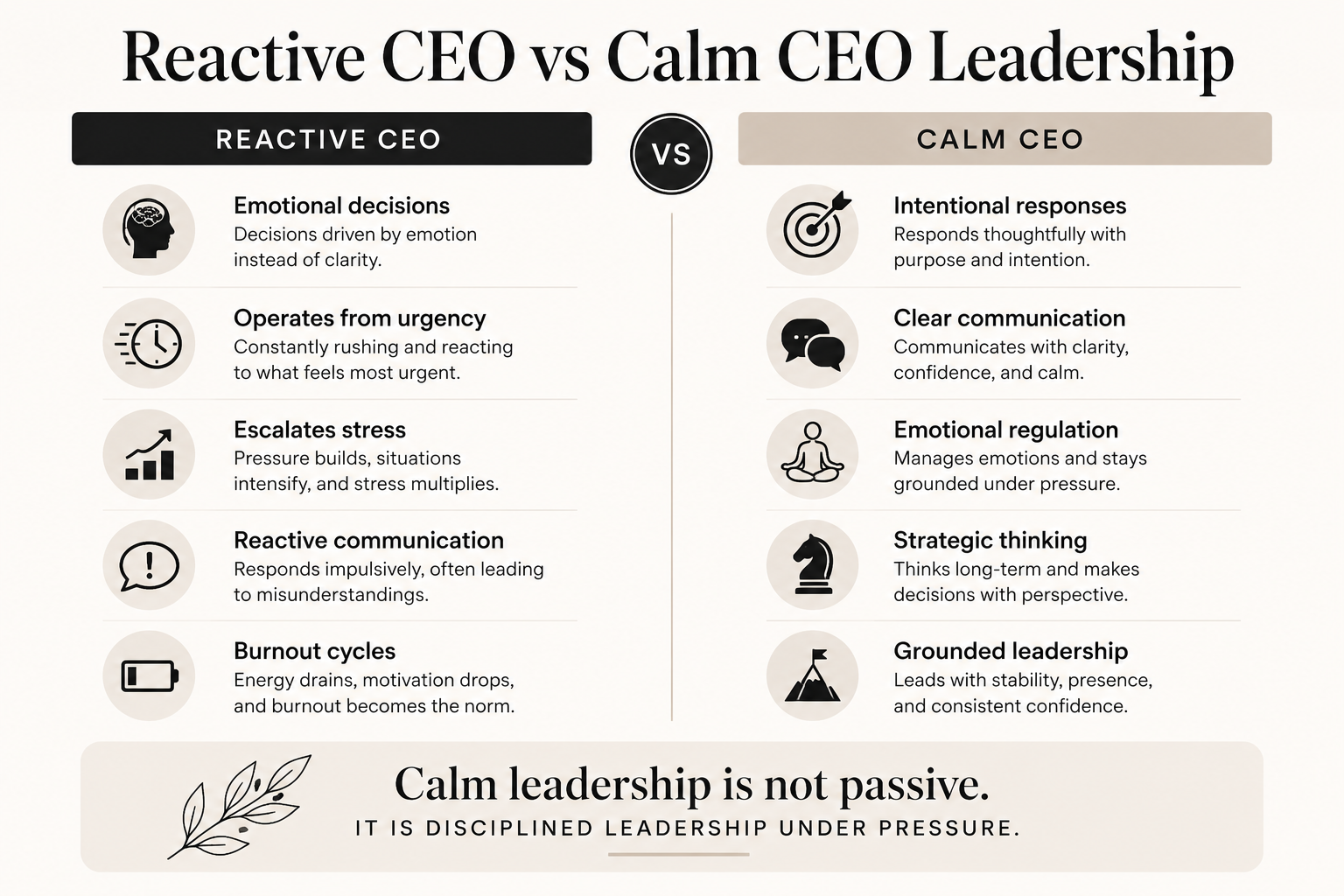
The Comparison
Reactive Leadership
Emotional decision-making
Escalates pressure
Operates from urgency
Creates instability
Reacts impulsively
Calm CEO Leadership
Intentional communication
Clear decision-making
Emotional regulation
Long-term thinking
Grounded leadership
The Reality Check
Many business owners believe leadership means handling constant pressure without slowing down.
But unmanaged stress often leads to:
burnout
emotional fatigue
reactive decision-making
strained relationships
inconsistent leadership
Calm is not avoidance.
It is the ability to stay clear-headed while carrying responsibility
The Real Question
Are you leading your business intentionally — or emotionally reacting to pressure throughout the day?
The strongest CEOs are not the loudest or the most reactive.
They are the ones who can:
pause
think clearly
regulate emotions
communicate intentionally
lead with consistency under pressure
Because clarity is not just a mindset skill.
It shapes leadership, relationships, and long-term business decisions.