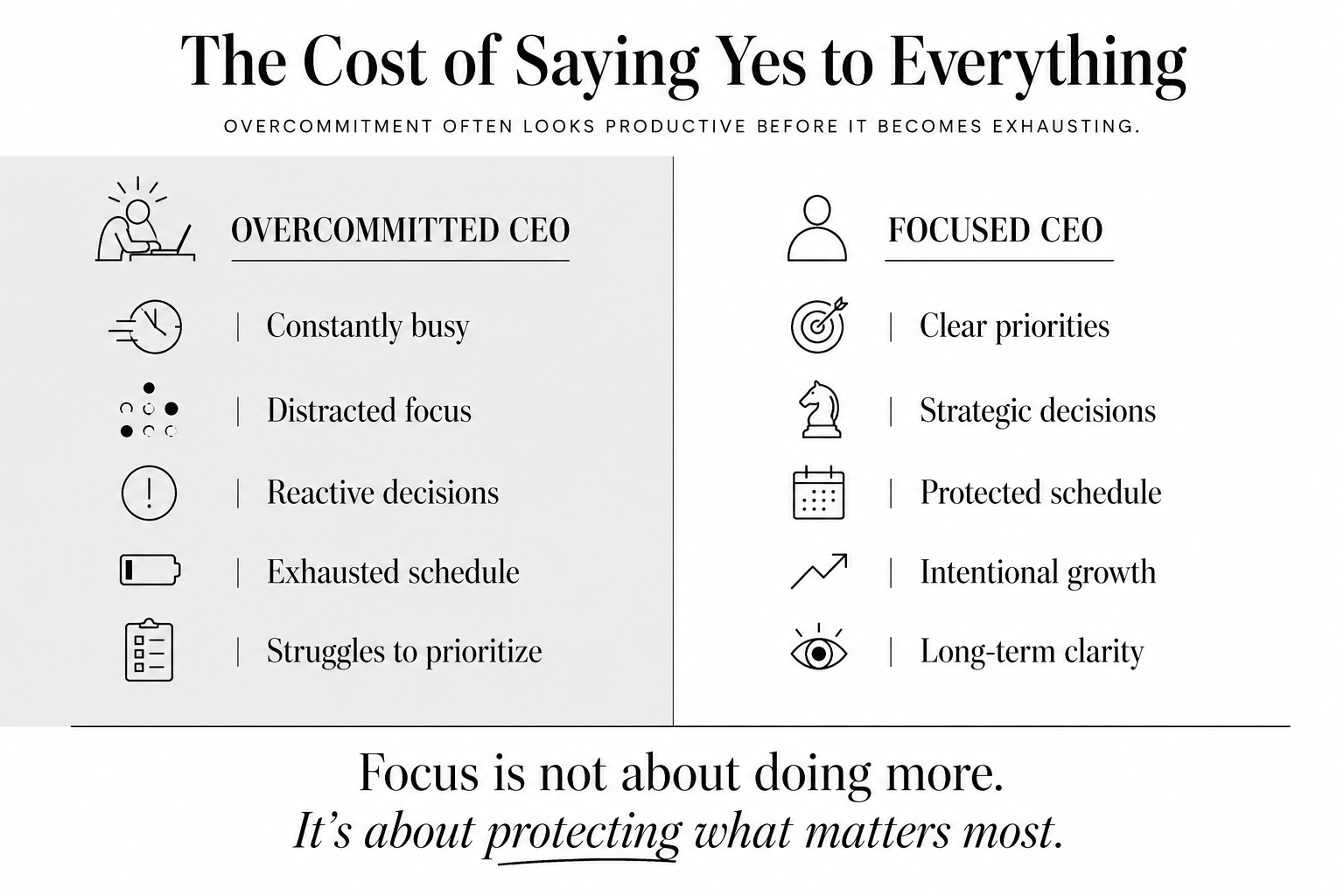
The Power of Saying No as a CEO
Saying no protects your time, energy, and focus.
The most effective CEOs are not the ones doing everything — they are the ones staying aligned with what actually moves the business forward.
Every “yes” creates responsibility, distraction, and time commitments.
Strategic growth often requires selective focus.
The How-To Steps
1. Set Clear Priorities
Know what matters most in your current season of business.
Ask yourself:
What actually drives growth?
What deserves my attention right now?
What creates unnecessary stress?
Without priorities, everything feels urgent.
2. Evaluate Opportunities Carefully
Not every opportunity is worth your time.
Before saying yes, ask:
Does this align with my goals?
Will this create long-term value?
Does this support the direction of the business?
Sometimes good opportunities still become distractions.
3. Protect Your Focus
Strong CEOs do not operate from constant pressure and availability.
This may mean saying no to:
unnecessary meetings
projects outside your focus
constant interruptions
commitments that drain energy
Protecting your focus protects your leadership.
4. Stay Aligned With Your Vision
Long-term growth requires intentional decisions.
Saying no creates:
more clarity
better decision-making
stronger leadership
healthier business systems
Focus creates momentum.
5. Remember That Growth Requires Boundaries
Many CEOs believe saying yes creates more growth.
But overcommitting often creates:
burnout
scattered attention
slower progress
inconsistent leadership
Sustainable growth requires boundaries.
The Comparison
Saying Yes to Everything
Constant overwhelm
Reactive decisions
Scattered attention
Burnout cycles
Busy schedule
Selective CEO Focus
Clear priorities
Intentional leadership
Focused growth
Sustainable momentum
Strategic execution
The Reality Check
Many business owners think saying yes creates more opportunities.
But overcommitting often slows growth.
Too many responsibilities create:
decision fatigue
inconsistent leadership
lack of focus
unnecessary stress
Growth usually improves when CEOs simplify.
The Real Question
If everything in your business feels urgent, the problem may not be your workload — it may be a lack of clarity.
Many CEOs are trying to make strategic decisions without organized systems, financial visibility, or clear priorities behind the business.
That often leads to:
constant overwhelm
reactive leadership
scattered focus
long-term burnout
Strong businesses operate differently.
They are built with structure, clear financial organization, and systems that support better decision-making over time.
Because clarity is not just a leadership skill.
It is also a financial one.