
The Cost of Making Decisions Based on Emotion
Every business owner experiences stress.
A difficult client.
A disappointing month.
An unexpected expense.
A team issue.
A business setback.
The challenge isn't avoiding emotions.
The challenge is avoiding emotional decisions.
Many of the most costly mistakes in business happen when leaders react instead of respond.
Successful business owners understand that emotions provide information, but they should not drive decisions.
When decisions are based on frustration, fear, anger, or panic, the results often create bigger problems than the original issue.
Direct Answer
Making decisions based on emotion often leads to poor judgment, inconsistent leadership, and costly mistakes. Successful business owners learn to pause, evaluate the facts, and make decisions based on strategy instead of temporary feelings.
1. Pause Before Reacting
When emotions are high, clarity is often low.
If a client sends a frustrating email or a problem arises unexpectedly, your first reaction may not be your best response.
Before making a decision:
Take a step back
Give yourself time to think
Avoid responding immediately
Allow emotions to settle
Many business problems become easier to solve after a short pause.
The goal is not to ignore emotions.
The goal is to prevent emotions from controlling the outcome.
2. Focus on Facts Instead of Feelings
Emotions can distort reality.
Fear may make challenges seem bigger than they are.
Frustration may make people appear to be the problem when the issue is actually a process failure.
Before making a decision, ask:
What facts do I know?
What assumptions am I making?
What evidence supports this decision?
What information am I missing?
Facts create clarity.
Clarity creates better decisions.
3. Consider the Long-Term Impact
Emotional decisions often focus on immediate relief.
Strategic decisions focus on long-term results.
For example:
Firing an employee in frustration
Ending a client relationship impulsively
Making a large purchase out of fear
Changing direction because of one difficult month
These decisions may feel good in the moment but create challenges later.
Successful leaders ask:
"How will this decision impact my business six months from now?"
That question often changes everything.
4. Seek Perspective
Business ownership can feel isolating.
When emotions are involved, it helps to gain perspective from trusted advisors.
This may include:
A mentor
A coach
A business partner
A financial advisor
A trusted colleague
Sometimes a simple conversation reveals options you could not see on your own.
Strong leaders know they do not have to make every decision alone.
5. Respond Intentionally
Once emotions have settled and facts have been evaluated, it is time to act.
Intentional decisions are:
Thoughtful
Strategic
Consistent
Aligned with goals
This does not mean every decision will be perfect.
It means every decision is made with purpose rather than impulse.
Over time, intentional decisions create stronger businesses and stronger leaders.
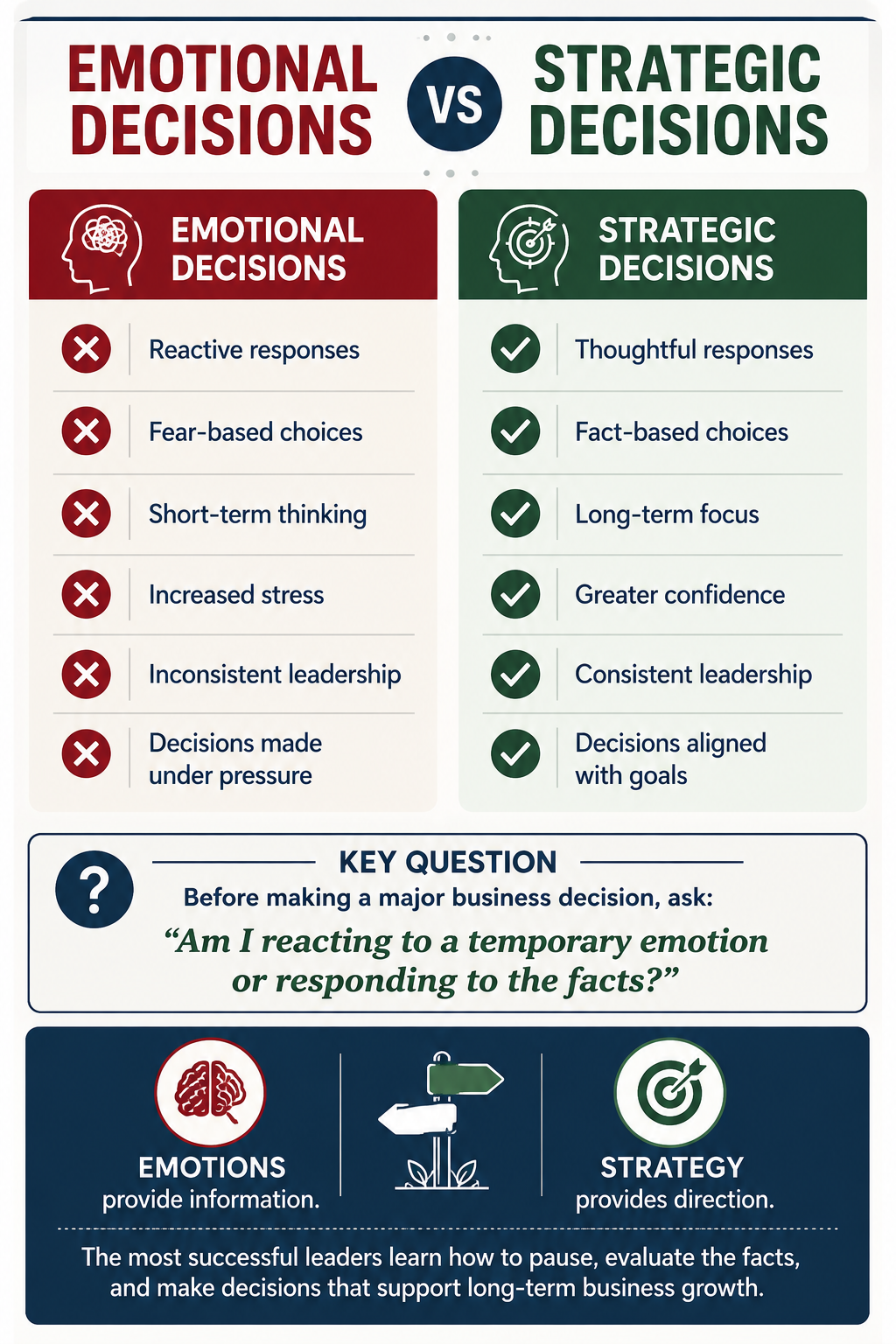
Emotional Decisions vs Strategic Decisions
Emotional Decisions
Reactive
Fear-based
Short-term focused
Inconsistent
Driven by stress
Strategic Decisions
Intentional
Fact-based
Long-term focused
Consistent
Aligned with goals
Reality Check
Every business owner will face emotional situations.
The difference is not whether emotions exist.
The difference is whether emotions control the decision.
Some of the most expensive mistakes in business happen because leaders react in the moment instead of evaluating the situation carefully.
The ability to stay calm and think clearly is one of the most valuable leadership skills you can develop.
Final Thoughts
Leadership is not about avoiding emotions.
Leadership is about managing them.
The most successful CEOs understand that emotional reactions are temporary, but business decisions often have lasting consequences.
When you pause, evaluate the facts, and think strategically, you position yourself to make better decisions for your team, your customers, and your future.
The goal is not to eliminate emotion.
The goal is to lead beyond it.
The best business decisions are built on clear information, not emotional reactions.
Before making your next big decision, ask yourself: Do I have the financial clarity and data needed to move forward confidently?
