
Clarity Is the Foundation of Every Great Business
Running a business can feel complicated. There are clients to serve, decisions to make, employees to manage, expenses to track, and goals to reach.
But often, the biggest challenge is not having too much to do.
It is not knowing exactly where the business stands.
When you have clarity, you can make decisions with confidence. You know what is working, what needs attention, and where you should focus next.
That is why clarity is the foundation of every great business.
You Cannot Lead Clearly When You Cannot See Clearly
Business owners make decisions every day.
Should you hire someone?
Can you afford to invest in new equipment?
Is it time to raise your prices?
Which service is actually making you the most money?
Can you afford to take time away from the business?
Without clear information, these decisions become guesses.
You may have a successful business on the outside while still feeling uncertain behind the scenes. Revenue may be growing, but you may not know whether profit is growing with it. Your bank account may look healthy, but upcoming expenses and taxes could tell a different story.
When you do not have clarity, even simple decisions can feel complicated.
The Direct Answer:
Clarity Gives You the Confidence to Make Better Decisions
Clarity means understanding what is actually happening in your business.
It means knowing your numbers.
It means understanding your cash flow.
It means knowing where your money is going.
It means having systems that give you reliable information instead of constantly searching for answers.
The strongest business owners do not need to know every detail at every moment. But they do need access to the right information when it is time to make a decision.
Financial clarity turns questions into conversations based on facts instead of assumptions.
How to Create More Clarity in Your Business
You do not need to track everything. You need to consistently track the information that helps you run the business.
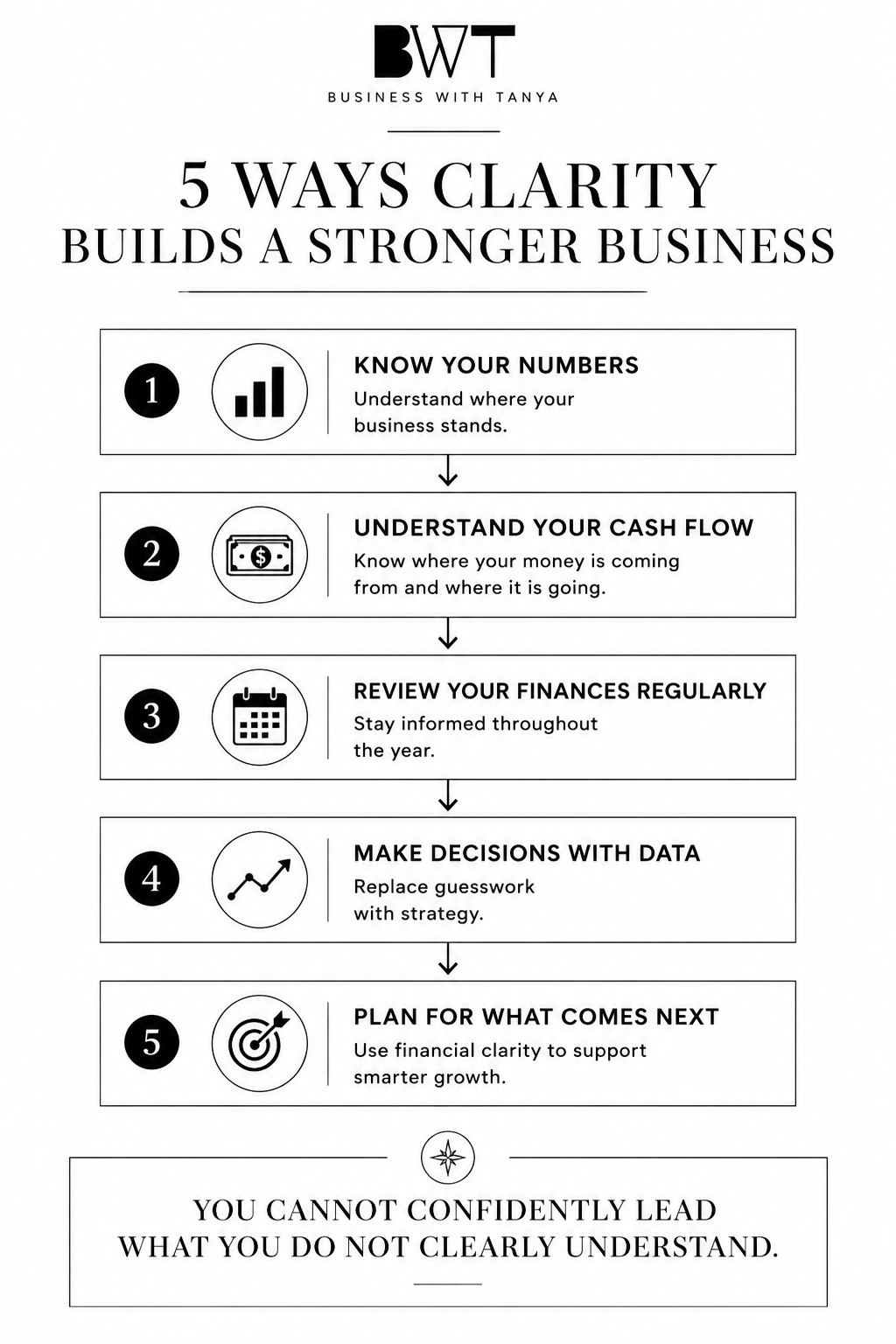
Step 1: Know Your Key Numbers
Start with the basics: revenue, expenses, profit, cash flow, and tax obligations.
These numbers give you a clearer picture of the financial health of your business.
Step 2: Keep Your Financial Records Current
Financial reports are only helpful when the information behind them is accurate and up to date.
Consistent bookkeeping allows you to see what is happening now instead of discovering problems months later.
Step 3: Review Your Numbers Regularly
Do not wait until tax season to look at your finances.
Create a regular schedule to review your financial reports and ask questions about what you see.
Step 4: Connect Your Numbers to Your Decisions
Your financial information should help you decide what happens next.
Before hiring, expanding, increasing spending, or making another major move, look at what your numbers are telling you.
Step 5: Get Support When You Need It
Having financial reports is one thing. Understanding what they mean for your business is another.
The right financial support can help you turn numbers into useful information and useful information into better decisions.
Comparison: Running on Guesswork vs. Running With Clarity
Without Clarity:
Decisions are based on your bank balance.
Taxes feel like a surprise.
Cash flow problems appear unexpectedly.
Growth feels uncertain.
You react to problems.
You wonder where the money went.
With Clarity:
Decisions are based on the full financial picture.
Tax obligations are planned for.
Cash flow is monitored and planned.
Growth decisions are supported by data.
You identify issues earlier.
You understand how money moves through the business.
The difference is not simply having more information. It is having the right information at the right time.
The Reality Check: More Revenue Does Not Automatically Create More Clarity
A business can grow quickly and still have unclear finances.
In fact, growth can make a lack of clarity even more expensive.
As revenue increases, so can payroll, taxes, overhead, debt, and operational complexity. Without strong bookkeeping and financial systems, business owners can find themselves managing a larger company without truly understanding its financial position.
That is why clarity needs to grow with the business.
The goal is not simply to make more money.
The goal is to understand the business well enough to make smart decisions about the money you are making.
The Bigger Picture: Clarity Creates Better Leadership
Financial clarity is not only an accounting issue.
It is a leadership advantage.
When you understand your numbers, you can set realistic goals. You can identify opportunities sooner. You can recognize problems before they become emergencies. You can make decisions based on strategy instead of emotion.
You also gain something many business owners are constantly searching for: confidence.
You may not know exactly what the future holds, but you know where your business stands today.
And that gives you a stronger foundation for deciding where it goes next.
How Clear Is Your Business Today?
Ask yourself:
If you had to make a major financial decision for your business today, would you have the information you need to make it confidently?
If the answer is no, the next step may not be working harder or chasing more revenue.
It may be creating more clarity.
Strong bookkeeping, accurate financial reporting, and proactive financial guidance can help you understand what is happening inside your business so you can make better decisions about what comes next.
Because great businesses are not built on guesswork.
They are built on clarity.
