
Why Revenue Doesn't Equal Success
Many entrepreneurs believe that if they can just increase their revenue, everything else will fall into place.
More sales should mean more profit.
More clients should mean more financial security.
More growth should mean more freedom.
But that's not always the case.
Many businesses generate impressive revenue while struggling with cash flow, shrinking margins, rising expenses, and constant financial stress.
The problem isn't always a lack of income.
It's a lack of profitability and financial visibility.
Revenue may make a business look successful from the outside, but profit is what determines whether it's sustainable.
The Direct Answer
Revenue alone does not build a healthy business.
Profit and cash flow do.
A profitable business has the resources to:
pay the owner consistently
invest in growth
hire strategically
prepare for slower seasons
reduce financial stress
build long-term stability
The strongest businesses don't simply generate more revenue.
They manage that revenue intentionally.
Understanding the difference between revenue and profit is one of the most important financial skills a CEO can develop.
The How-To Steps
1. Track Profitability Instead of Just Revenue
Revenue tells you how much money comes into the business.
Profit tells you how much money actually stays.
Every business owner should regularly ask:
Which services are the most profitable?
Which clients generate the strongest margins?
Where are expenses increasing?
Are we growing profit or just increasing workload?
More revenue without profitability often leads to burnout instead of freedom.
Knowing your profit helps you make smarter decisions about pricing, hiring, and future growth.
2. Understand Where Your Money Is Going
Many business owners review their bank balance but never analyze their expenses.
Without understanding where money is being spent, it's impossible to improve profitability.
Regularly reviewing expenses helps identify:
unnecessary subscriptions
inefficient processes
rising operating costs
pricing issues
areas where profit is quietly disappearing
Financial awareness creates better leadership.
The more you understand your expenses, the more confidently you can lead your business.
3. Build Financial Systems That Support Growth
Sustainable businesses rely on strong financial systems.
That includes:
accurate bookkeeping
timely financial reporting
consistent expense tracking
cash flow monitoring
proactive tax planning
These systems provide business owners with the information needed to make confident decisions instead of emotional ones.
Growth becomes much less stressful when financial systems provide clarity behind every decision.
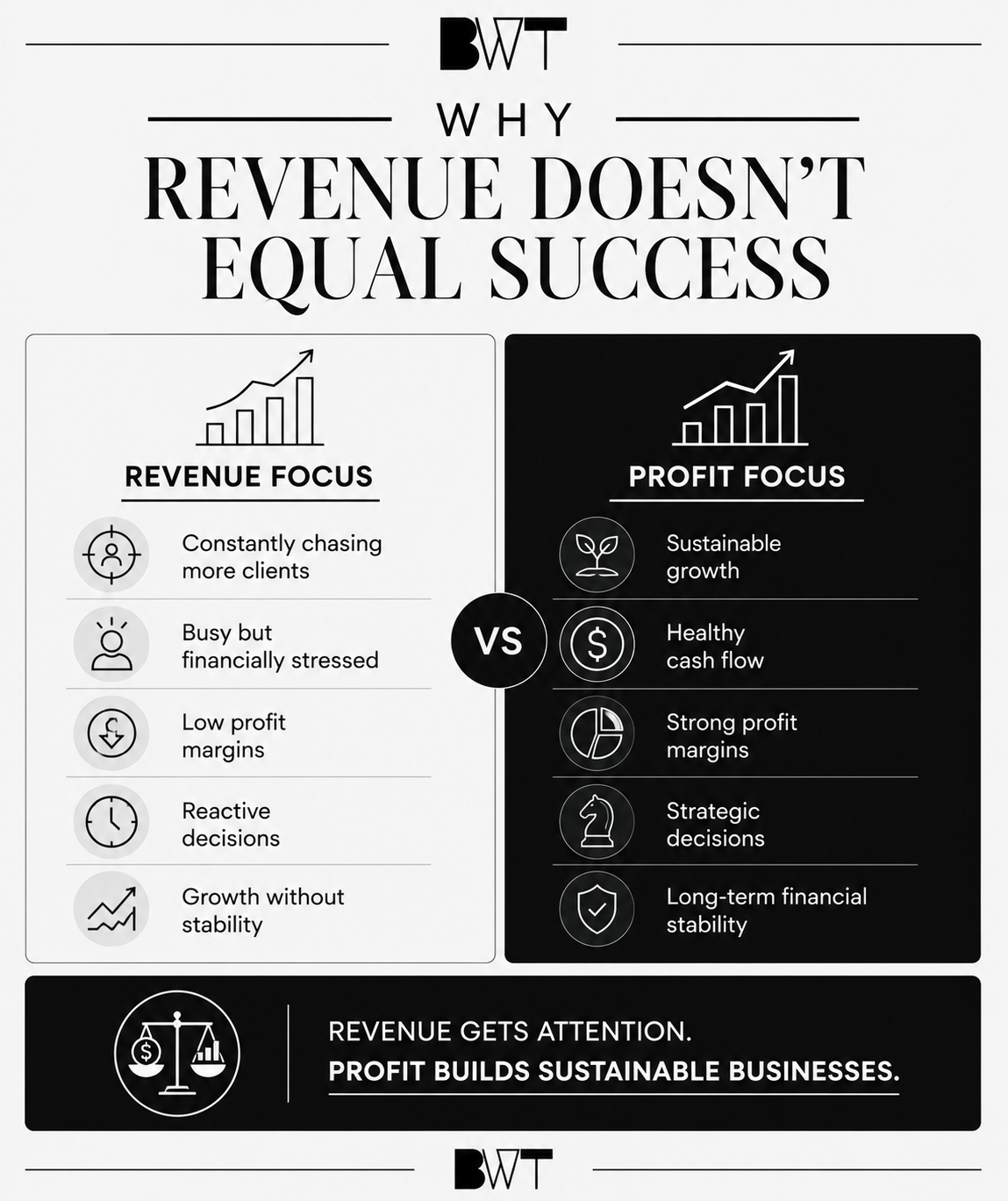
Revenue Focus vs. Profit Focus
Revenue Focus
Constantly chasing more clients
Busy but financially stressed
Low profit margins
Reactive financial decisions
Growth without stability
Profit Focus
Sustainable growth
Healthy cash flow
Strong profit margins
Strategic decision-making
Long-term financial stability
The Reality Check
A business can generate hundreds of thousands—or even millions—of dollars in revenue and still struggle financially.
Without understanding profitability, business owners may continue working harder while keeping less.
Revenue creates opportunity.
Profit creates sustainability.
The goal isn't simply to build a bigger business.
It's to build a healthier one.
The Financial Connection
Understanding profitability requires more than looking at a bank account.
Accurate bookkeeping, reliable financial reporting, and proactive tax planning provide the clarity business owners need to understand where profit is being created—and where it's being lost.
At Business With Tanya, we believe better leadership starts with better financial clarity.
Through Emerald Tax & Accounting, entrepreneurs gain the bookkeeping, financial reporting, tax planning, and advisory services needed to improve profitability, make confident decisions, and build sustainable long-term growth.
Because revenue may create attention.
But profit creates stability.
