
What Healthy Businesses Have in Common
The Direct Answer
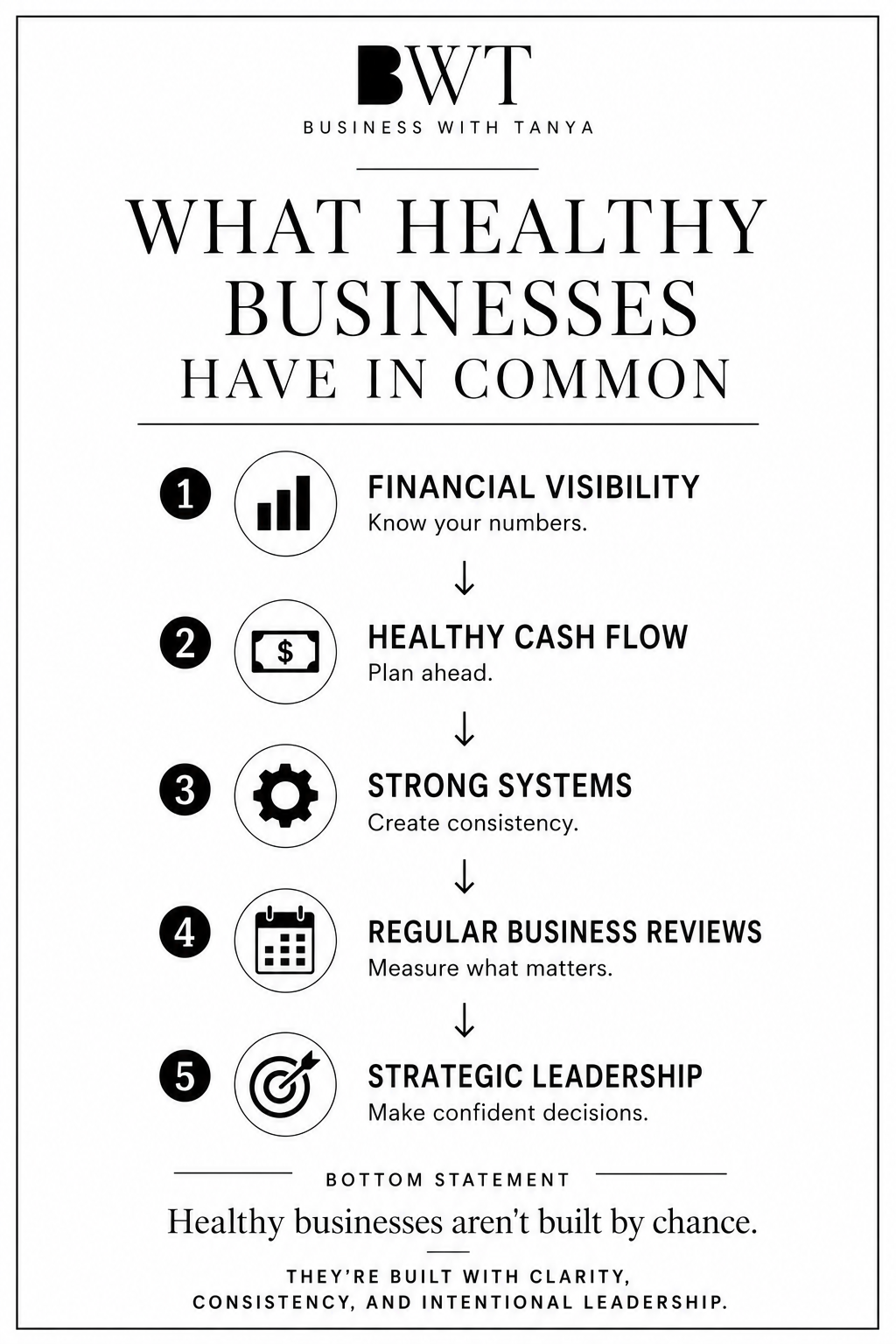
Healthy businesses share a few key characteristics: they know their numbers, maintain healthy cash flow, operate with reliable systems, make proactive decisions, and regularly review their performance.
Revenue alone doesn't determine whether a business is healthy. Businesses that consistently grow over time build financial clarity and operational stability that allow them to adapt, scale, and weather challenges.
1. Healthy Businesses Know Their Numbers
Successful business owners don't wait until tax season to understand their finances.
They regularly review:
Revenue
Expenses
Profit
Cash flow
Key performance indicators (KPIs)
These numbers help leaders make confident decisions instead of relying on assumptions.
When you understand your financial position, you can plan for growth instead of reacting to surprises.
2. They Build Systems That Create Consistency
Healthy businesses don't depend on memory or constant owner involvement.
Instead, they create systems for:
Client onboarding
Bookkeeping
Sales processes
Team communication
Operations
Systems reduce stress, improve efficiency, and create a better experience for both employees and customers.
As your business grows, strong systems become even more valuable.
3. They Protect Their Cash Flow
Profit is important.
Cash flow keeps your business alive.
Healthy businesses monitor incoming and outgoing cash consistently so they always know:
What bills are coming due
What revenue is expected
When to invest
When to slow spending
Cash flow management allows businesses to make strategic decisions rather than emotional ones.
4. They Review Performance Regularly
Healthy businesses don't operate on autopilot.
The most successful CEOs schedule time every month to review:
Financial reports
Business goals
Team performance
Operational challenges
Growth opportunities
Regular reviews help leaders catch small issues before they become expensive problems.
This habit creates continuous improvement throughout the business.
5. They Make Decisions With Strategy Instead of Emotion
Every business experiences uncertainty.
Healthy businesses don't eliminate challenges—they respond to them differently.
Rather than making decisions based on fear, urgency, or assumptions, successful leaders rely on data, planning, and long-term strategy.
That confidence comes from having financial visibility and understanding how each decision affects the business.
Healthy Business vs. Unhealthy Business
Healthy Business
Knows its financial numbers
Uses documented systems and processes
Reviews business performance every month
Plans for future growth
Makes strategic, data-driven decisions
Unhealthy Business
Guesses based on the bank balance
Relies on memory and constant owner involvement
Only reacts when problems appear
Constantly puts out fires
Makes emotional decisions under pressure
Reality Check
Many businesses appear successful on the outside while struggling internally.
High revenue doesn't always mean a healthy business.
Businesses that last are built on consistent financial habits, reliable systems, and leaders who understand their numbers. Those habits create stability during difficult seasons and provide the confidence to grow when opportunities arise.
A healthy business isn't defined by how busy you are—it's defined by how well your business functions without constant crisis management.
Ready to Build a Healthier Business?
If you want to make better decisions, strengthen your financial foundation, and create a business that supports long-term success, it starts with clarity.
At Business With Tanya, we help entrepreneurs build healthier businesses through leadership, strategy, and financial confidence. Together with Emerald Tax & Accounting and Golden Apple Agency, we help business owners understand their numbers, improve financial visibility, and create systems that support sustainable growth.
Because healthy businesses don't just grow—they grow intentionally.
