
Scaling Smart: The Difference Between Growth and Chaos
Every business owner wants growth.
More clients.
More sales.
More visibility.
More opportunities.
But growth without structure quickly becomes overwhelming.
What initially feels exciting eventually starts creating:
• operational stress
• communication breakdowns
• missed opportunities
• financial pressure
• burnout
Many businesses are built to survive — not to scale.
And without strong systems behind the growth, success starts creating chaos instead of stability.
The Direct Answer
Sustainable growth requires structure before expansion.
Without systems, businesses rely too heavily on:
• memory
• hustle
• reactive problem solving
• emotional decision making
That creates inconsistency.
Strong businesses scale successfully because they build operational structure before growth becomes overwhelming.
Smart scaling includes:
• clear systems
• organized workflows
• accurate financial visibility through timely reporting
• operational efficiency
• leadership clarity
Growth should create momentum — not constant stress.
The How-To Steps
1. Build Systems Before Scaling
Many business owners try to grow first and organize later.
That usually creates operational chaos.
Strong systems create:
• smoother workflows
• better communication
• clearer expectations
• more consistency
• reduced stress
Examples include:
• onboarding systems
• bookkeeping and financial tracking systems
• content workflows
• client communication processes
• team procedures
Systems allow businesses to grow without relying on constant emotional effort from the owner.
2. Strengthen Operations and Workflows
Growth exposes weaknesses quickly.
Without strong operations:
• projects fall behind
• communication becomes inconsistent
• response times slow down
• mistakes increase
• financial organization suffers
Strong businesses regularly improve:
• workflows
• team structure
• operational efficiency
• scheduling systems
• bookkeeping, invoicing, and financial processes
The goal is not just growth.
The goal is sustainable growth supported by operational clarity.
3. Focus on Sustainable Growth Instead of Fast Growth
Fast growth often looks impressive from the outside.
But rapid scaling without structure usually leads to:
• burnout
• broken systems
• inconsistent service
• cash flow problems caused by poor financial visibility
• leadership exhaustion
Smart scaling means growing intentionally.
That sometimes means:
• slowing down temporarily
• strengthening systems first
• improving operations
• saying no to the wrong opportunities
The strongest businesses focus on long-term stability instead of short-term momentum.
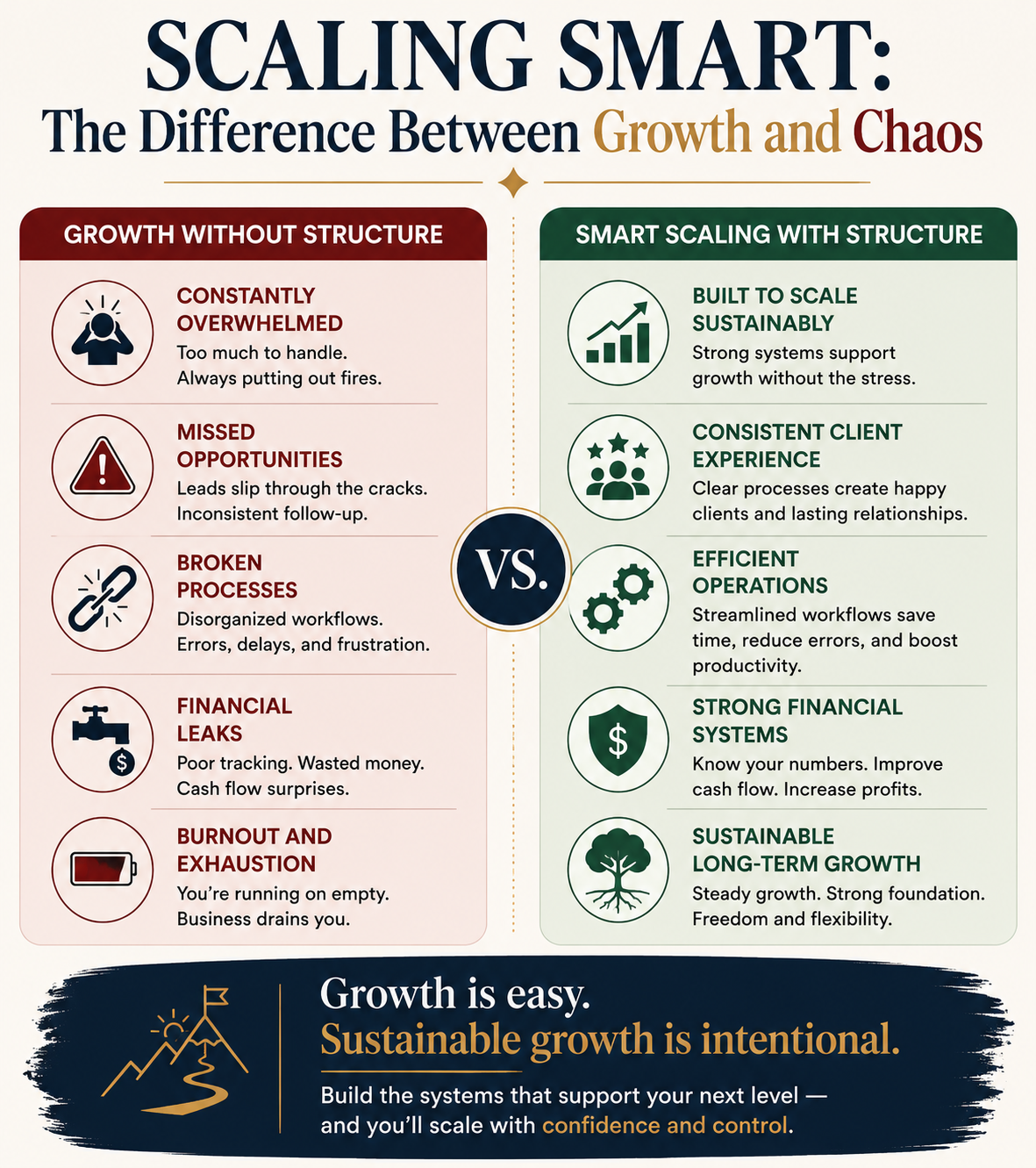
The Comparison
Growth Without Structure
• Constantly overwhelmed
• Missed opportunities
• Broken processes
• Financial leaks
• Burnout and exhaustion
Smart Scaling With Structure
• Built to scale sustainably
• Consistent client experience
• Efficient operations
• Strong financial systems
• Sustainable long-term growth
That structure should include strong financial systems. As your business grows, accurate bookkeeping, timely financial reporting, and proactive tax planning become essential for making confident decisions. Without financial clarity, even healthy growth can quickly become stressful and difficult to manage.
The Reality Check
Growth alone does not guarantee success.
Without systems and operational structure, growth often creates more stress instead of more freedom.
The businesses that scale sustainably are usually the ones that:
• know their numbers
• strengthen operations early
• improve systems consistently
• lead intentionally
Because sustainable growth is built through structure — not constant hustle.
Ready to Scale with Financial Clarity?
Building strong systems is only part of sustainable growth. Having accurate financial reports, organized bookkeeping, and proactive tax planning gives business owners the confidence to make better decisions and scale strategically.
At Emerald Tax & Accounting, we help businesses build the financial foundation behind sustainable growth through bookkeeping, tax planning, and strategic advisory services.
Because growth shouldn't create chaos—it should create clarity.
