
How Do I Get My Bookkeeping Caught Up Fast?
Why Falling Behind Happens
Most business owners don't fall behind because they don't care about their finances.
They fall behind because they're busy.
They're serving clients, managing employees, solving problems, and trying to grow their business.
Bookkeeping becomes something they'll "catch up on later."
Unfortunately, later often turns into months—or even years.
The longer your books remain outdated, the harder it becomes to understand what's really happening in your business.
How to Get Your Bookkeeping Caught Up
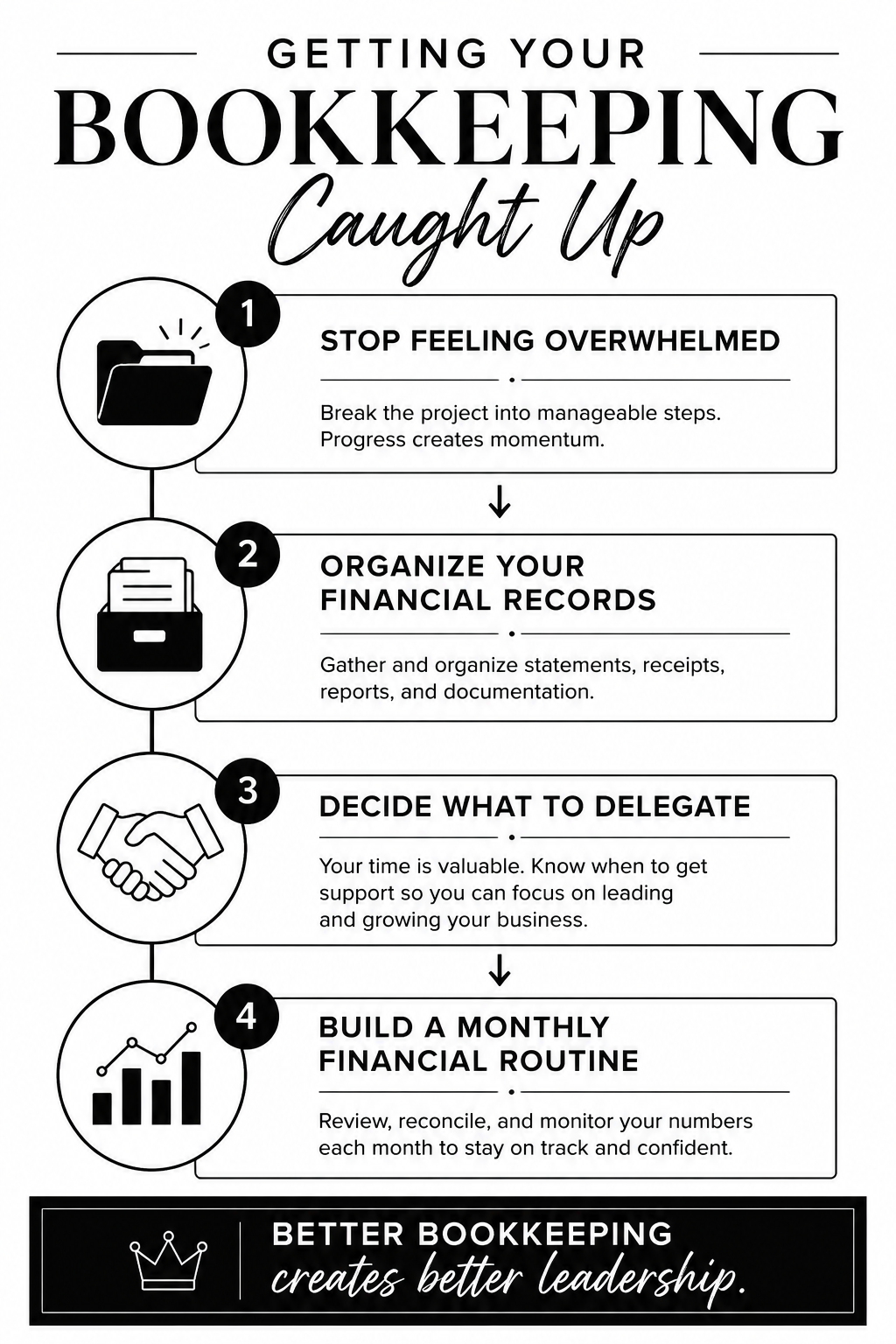
1. Stop Trying to Do Everything at Once
Looking at months of unfinished bookkeeping can feel overwhelming.
Instead of trying to fix everything in one weekend, break the project into manageable pieces.
Progress creates momentum.
One month completed is better than twelve months ignored.
2. Organize Your Financial Information
Gather:
Bank statements
Credit card statements
Loan information
Payroll reports
Receipts
Previous bookkeeping records
When everything is organized, the work becomes much simpler.
Organization creates clarity before a single transaction is entered.
3. Decide Whether Your Time Is Better Spent Leading
This is the question many business owners avoid.
Can you learn bookkeeping?
Absolutely.
But should your time be spent catching up on transactions—or growing your business?
Every hour spent organizing old records is an hour you're not serving clients, building relationships, or creating new opportunities.
Sometimes the smartest business decision is knowing what to delegate.
4. Build a Monthly System Going Forward
Getting caught up is only half the battle.
The real goal is staying caught up.
Create a consistent monthly routine:
Review your financial reports.
Reconcile your accounts.
Monitor cash flow.
Understand profitability.
Small monthly habits prevent massive cleanup projects later.
Doing It Yourself vs. Building a Better System
DIY Catch-Up
Takes significant time.
Easy to procrastinate.
Can delay important business decisions.
Often becomes another unfinished project.
Strategic Business Owner
Prioritizes financial clarity.
Uses accurate financial information.
Delegates where appropriate.
Focuses on growing the business.
One approach keeps you busy.
The other helps you lead.
Reality Check
Many business owners believe they're behind because they aren't organized enough.
The real issue is often that they've outgrown trying to do everything themselves.
Growth requires better systems.
Financial systems are some of the most important systems your business will ever have.
Why Financial Clarity Matters
Bookkeeping isn't about entering numbers.
It's about understanding your business.
When your financial records are accurate and current, you can:
Make faster decisions.
Identify profitable opportunities.
Improve cash flow.
Plan for growth.
Lead with confidence instead of uncertainty.
Financial clarity doesn't just improve your bookkeeping.
It improves your leadership.
Ready to Stop Guessing?
The best business owners don't wait until tax season to understand their numbers.
They create systems that give them financial clarity all year long.
If your bookkeeping has fallen behind, don't look at it as another task on your to-do list.
Look at it as an opportunity to regain control of your business and make better decisions moving forward.
Because great leadership starts with knowing where your business stands today.
