
Every Decision Has a Financial Impact
Direct Answer
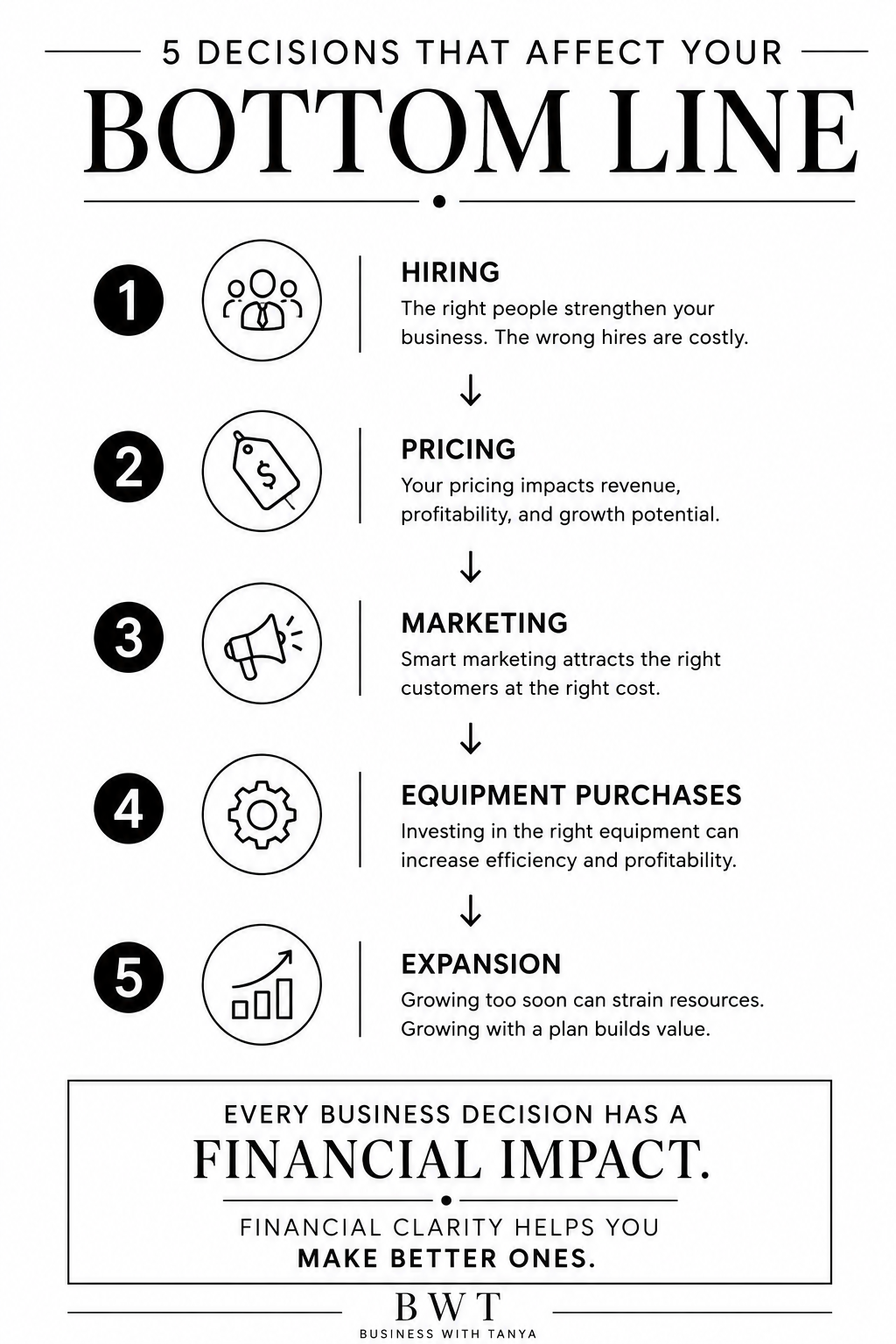
Every decision you make in your business affects your finances in some way. Whether you're hiring an employee, purchasing equipment, changing prices, or launching a new service, every choice influences profitability, cash flow, and long-term growth.
The Problem
Many business owners separate operational decisions from financial decisions.
In reality, they're the same thing.
Every decision either strengthens or weakens the financial health of your business.
Without understanding the numbers behind those decisions, it's difficult to know whether you're moving forward.
1. Understand the Cost
Every decision has both an immediate cost and a long-term financial impact.
Looking beyond the purchase price helps you make smarter choices.
2. Evaluate the Return
Ask yourself what result you expect from every investment.
Will it save time?
Increase revenue?
Reduce expenses?
Improve efficiency?
3. Measure the Results
Once you've made the decision, review the outcome.
The best leaders learn from every decision by comparing expectations with actual results.
Strategic Decisions vs. Emotional Decisions
StrategicEmotionalUses financial dataUses assumptionsMeasures outcomesHopes for resultsSupports long-term goalsSolves short-term discomfortBuilds profitabilityCreates uncertainty
Reality Check
No decision is financially neutral.
Even choosing to wait has a financial cost.
Understanding that impact helps leaders become more intentional.
Conclusion
Business decisions become easier when you understand how they affect your finances.
Instead of guessing, you begin leading with confidence because every decision is supported by better information.
The more clearly you understand your numbers, the better your decisions become. Financial clarity gives you the confidence to make choices that support long-term success.
